

How To Install Ceiling Cornice Video

Cornices, shadow line & alternatives
The cornice area is where walls and ceilings bring together. This area can be detailed in many different ways commonly depending on the style and budget of your build.
The most mutual blazon of ceiling and wall join application is called cornicing but in that location are other options on the market such as shadow line, moulded cornicing, foursquare set, coffered and soffit.
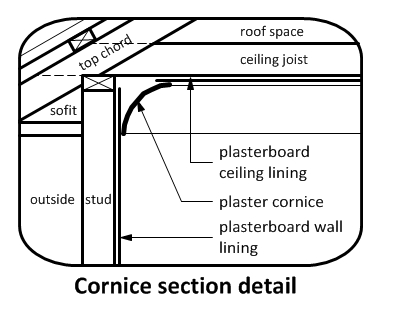
Cornicing is easy to install. Information technology just needs to be cut to length with a craft knife and glued into identify with plasterers gum. Plasterers find working with this product simple as wall and ceiling sheets can be cut quick and roughly as plasterers know the joins will exist covered with the cornice.
Cornicing
Plain plasterboard cornicing is generally the most price effective wall to ceiling bring together detail on the market place. This is due to it's cheap installation, ease of application and it'due south solid acceptance in the Australian construction industry.
Plain plasterboard cornicing is piece of cake to install. Information technology just needs to be cut to length with a craft knife or saw and glued into identify with plasterers gum and maybe a few nails. Plasterers find working with this production elementary as wall and ceiling sheets can be cut quick and roughly (as plasterers know the joins volition be covered with the cornice). The cornice is then briefly plastered at the joins and sanded ready to a 'standard level' finish ready for painting. Encounter more well-nigh 'level' of finishes farther on.
Manifestly plasterboard cornicing is easy to install. Information technology but needs to be cutting to length with a craft knife or saw and glued into place with plasterers glue and maybe a few nails. Plasterers notice working with this product simple every bit wall and ceiling sheets can be cut quick and roughly (as plasterers know the joins volition be covered with the cornice). The cornice is then briefly plastered at the joins and sanded prepare to a 'standard level' stop ready for painting. See more nearly 'level' of finishes farther on.
Click hither to see a great guide on how to cut your cornicing.
Shadow line
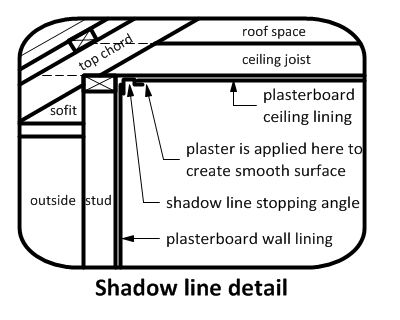
Shadow line tin can be an expensive type of join. The wall and ceiling sheets need to be cut correctly and neatly as there will exist no material to encompass rough edges. Wall and ceiling sheets are installed offset and then a shadow line "stopping angle" is social club and nailed into place. The corner then needs to be plastered where the bending meets the plasterboard on the ceiling and wall. It is then sanded to a 'high level' cease gear up for painting. Shadow line joins are perfect for very mod homes and provides a minimalistic, non-fussy finish.
Moulded cornicing
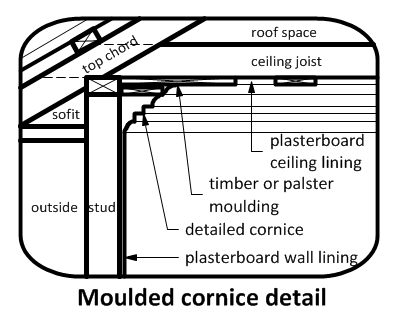
Moulded cornicing is perfect for traditional styled homes like Federation and Victorian homes for case. They provide lots of detail and interest to the wall & ceiling join area but they are time intensive to install - costing more a uncomplicated plasterboard cornice. The second epitome from the top of this article is a good instance of this blazon of cornice.
Moulded cornicing can be detailed and synthetic in two unlike ways:
-
The mouldings can be uniquely fatigued (member past fellow member) and then installed (member past fellow member) by a professional or,
-
Pre-designed detailed mouldings can be purchased from a specialist plaster moulding supplier. This option is more than price effective as at that place is less labour involved in blueprint and installation. Notwithstanding if you choose a pre-made moulding you volition be express past the pre-made options.
Square-set
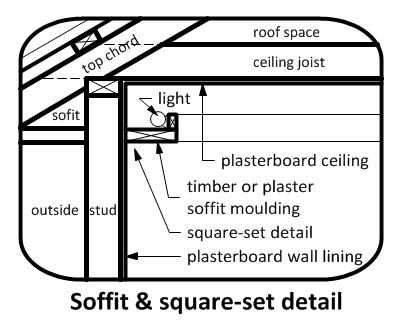
Foursquare-gear up cornices are a very pop pick in the college end mass Australian housing market. This type of wall to ceiling join type is probably the most cost effective afterwards manifestly plasterboard cornicing and suites modern manner homes. Foursquare prepare corners however also attract more than spiders and are harder to keep clearer of cobwebs than simple plasterboard cornices.
Coffered
If y'all want to spend oodles of money on beautifully detailed cornice detailing become no further than Coffered detailing. While the picture included here is aesthetically spectacular the labour involved in installing this type of item is significant. Y'all can install pre-made Coffered item but it looks nowhere near as good as the detail fabricated from scratch. See pre-made Coffered mouldings hither.
Soffit
Soffit detailing is a beautiful mode to incorporate lighting and detail into are normally forgotten space. While more than labour intensive to design and construct, if used sparingly in tin can really enhance the aesthetics and mood of an entry infinite or dining area for example. Usually soffit detailing is pattern by a building design or an architect, then installed past a architect. At that place are also a few pre-made options on the market, but again they merely don't compare aesthetically.
Materials
Plasterboard
Many cornicing products and mouldings are made from plasterboard. Plasterboard is a laminated sheet of cardboard with a core of gypsum plaster.
Moulded foam
One of the latest cornice and moulding materials is a cream composit production. These products are generally lighter than plasterboard products and are non susceptible to moisture and termite assault like plasterboard.
Detailed drawings
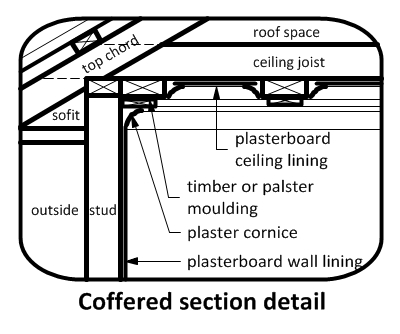

Source: https://www.homedesigndirectory.com.au/construction/wall-ceiling-junctions.php
Posted by: simonsdoetianighim.blogspot.com
0 Response to "How To Install Ceiling Cornice Video"
Post a Comment